Download Free Psilocybin Sourcing Guide

Join Our Online Learning Community

How Psychedelic Therapy Can Enhance Creativity

How psychedelic therapy can enhance creativity

The symbiotic relationship between psychedelics and creativity fosters both inspiration for novel ideas and vital avenues for expression, especially during integration. This broad definition of artistry emphasizes that everyone can engage in creation to materialize their authentic selves and leave a meaningful mark on the world.

Key Takeaways

  • Creativity is an inherent human trait, not a specialized skill, encompassing problem-solving, communication, and entertainment in everyday life.
  • Psychedelics can act as a tool to inspire creativity and facilitate self-expression.
  • Engaging in creative acts, regardless of the outcome, is crucial for authenticity and personal well-being.
  • Psychedelic Passage: Your Psychedelic Concierge — The easy, legal way to find trustworthy psilocybin guides, facilitators and psychedelic-assisted therapy near you in the United States

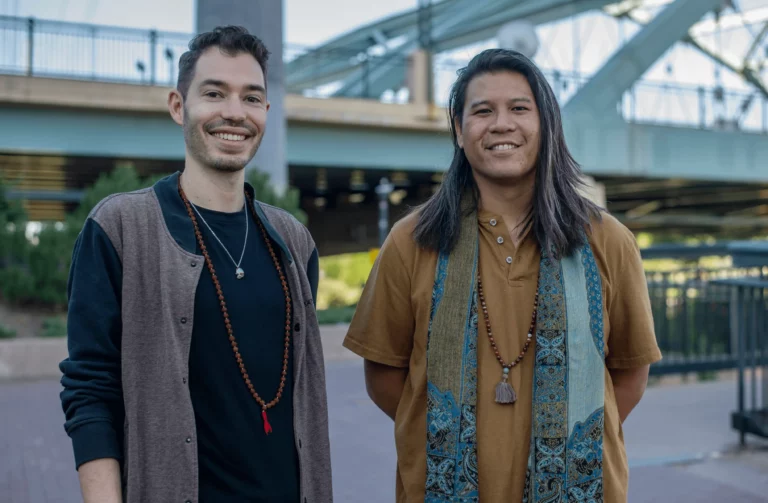
This article is inspired by our insightful podcast episode hosted by Psychedelic Passage co-founder, Jimmy Nguyen, which you can listen to on all streaming platforms. 

“Creativity is defined as the tendency to generate or recognize ideas, alternatives, or possibilities that may be useful in solving problems, communicating with others, and entertaining ourselves and others.” — California State University Northridge (What is creativity?)

By California State University Northridge’s definition, creativity is three-pronged, dealing with problem solving, communicating, and entertainment. We believe that creativity is a core facet of the human experience, and something uniquely attributed to our species. 

Where else do you see art purposefully created? And how does it put us at an evolutionary advantage? What’s the point of it? 

We might not have the answers, but we know art is a form of expression that helps us express things we may not even fully understand. Things that lose meaning with just words. 

Creativity and psychedelics have a unique relationship, directly affecting each other like two species in a symbiotic relationship. Psychedelics can act as a tool to inspire creativity, while creativity can be used as a form of expression during any part of the process, possibly most importantly in the integration phase.

Let’s dive in and learn about how creativity and psychedelic use intersect in many aspects of life, and why creativity is so important to the psychedelic healing process. 

The Importance of Creation

Modern Examples of Psychedelic Creativity

“Being influenced by psychedelics in order to be able to influence other folks.”

We’ve all heard of the Beatles, Pink Floyd, and the Grateful Dead, known for psychedelics influencing their work, as well as being incorporated into their work. 

It’s no secret that creative types like musicians, and visual artists like Alex and Alison Gray, utilize psychedelics in their work, but it may surprise you to find the big time tech guys who also admit to doing the same.

In the business and tech world we see big players like Steve Jobs, who admits using LSD in the 70’s and attributed his use to how he thought about systems and how it influenced Apple. 

In the article, ‘Did the use of psychedelics lead to a computer revolution?’ in The Guardian (2011), Wendy Grossman states, “From 1961 to 1965, the Bay Area-based International Foundation for Advanced Study led more than 350 people through acid trips for research purposes. Some of them were important pioneers in the development of computing, such as Doug Engelbart, the father of the computer mouse.”

We aren’t saying that Engelbart envisioned the computer mouse in a psychedelic vision, but we are entertaining the idea that his psychedelic use could have influenced his thinking, like problem solving skills, and in turn lent him some creativity. 

Recommended Reading: 21 Surprising Famous People Who Have Taken Psychedelics

Anyone Can Be an Artist

In a world increasingly focused on roles, jobs, and the masks we wear, the pursuit of authenticity has become a central theme for many. 

This quest often leads to a desire for fuller self-expression, a yearning to “show up fully in the world” without the burden of pretense.

We’ve seen many clients come to us looking to utilize intentional psychedelic use in their search for their true selves

One of the best ways to materialize the idea of your truest self is through creative expression. What are we but our actions anyways?

Creativity isn’t just about artists or those who work in traditionally “creative” fields—it’s a fundamental part of what makes us human. If you are a human, you are an artist. 

While we often associate “creativity” and “art” with specific skills like drawing or painting, this narrow definition feels shallow. 

Consider the Merriam-Webster definition of an artist: “a person who creates art,” “a person who is skilled at drawing, painting, et cetera,” “a skilled performer,” or, most crucially, “a person who is very good at something.”

This broader perspective liberates us from the notion that artistry is exclusive to a select few. Creativity isn’t just about generating a novel idea; it’s about recognizing possibilities, alternatives, and making them real.

It’s about looking at a blank canvas, whether it be literal or metaphorical, and having the imagination to bring something new into existence.

By expanding our understanding of creativity, we see that it penetrates all aspects of our lives. It means being exceptionally good at making others feel welcome, or safe, or provided for, or even a good conversationalist. 

Our unique characteristics are ones forged out of creativity as we grew up navigating the world around us. 

During the intake process, our cofounder, Jimmy Nguyen, asks his clients, “Do you believe that change is possible? Because if you don’t believe that change is possible, you’re going to be right. And if you do believe that change is possible, you’re going to be right.”

He goes on to say, “That’s the power of creation. That’s the ability to create.”

So remember, creativity isn’t rare, and it isn’t a specialized skill, it’s a vein that flows through each and every one of us, and deserves to be nurtured and utilized.

A Little Story About Leaving Our Mark on the World

Our deep, long-standing relationship with creativity can be summed up by a story Jimmy shares with us on our podcast.

He was sitting in a tent at his first harm reduction event a few years ago, and had met a man by the name of Tenkai. They and three other friends were discussing art and why it matters, when Tenkai shared something his father used to say, “All art is sh*t, because it’s the sh*t we leave behind.”

And then Jimmy really thought about it, momentarily astounded, and then realized the anthropological trail of bread crumbs that humans have left in our wake. From early cave drawings, to Homer’s Odyssey, even Shakespeare, who many argued just borrowed ideas from earlier works.

The art of each period in time allows future generations to glean into the human experience of that time, and in a way, a part of creation is to say, “hey, I’m here, in this specific moment in time.”

And whether it lasts a lifetime, or 10,000 years, it doesn’t really matter. It only matters to those who experienced it. 

This is where practicality comes in. If you want to utilize your creativity to the fullest, you have to be earnest in what you do. 

Whether it’s having a conversation with your daughter and teaching them a lesson, or teaching your students, or writing a book, it’s about sticking to it, even when you don’t want to, and not worrying about expectations or the goal of what it’s going to do for you.

That’s where creating art is like setting an intention or doing integration in psychedelic work. You can’t go into it with expectations on what it’s going to look like, you have to stick with it to make progress.

The Stoned Ape Hypothesis: A Thought Experiment 

Terence Mckenna’s Stoned Ape Hypothesis states that the advanced cognitive abilities of humans is due to the fact that when early hominids came down from the trees and started foraging, some populations encountered psychedelic mushrooms.

He theorizes that the development of our prefrontal cortex, our heightened sense or social awareness and responsibility, our sense of self and self awareness, all come from ingesting psychedelic mushrooms so many millennia ago.

Now, there aren’t many facts to back this hypothesis up, but the fact that it exists at all suggests that psychedelics must enhance our creativity, or a theory like this wouldn’t exist at all. 

For example, psychedelics can enhance visual acuity, which hypothetically would give hunters an advantage when hunting for the tribe.

Creativity in Intentional Psychedelic Use

Most of us think we have a pretty solid grasp on who we are and who we aren’t, but psychedelics give us the opportunity to shuffle around what we think we are, and allow parts of our genuine nature to rise up. 

Creative expression is a vital component to psychedelic use and integration in both micro and macrodosing.

In microdosing, one may use it to inspire new ideas. With macrodosing, creative expression can be utilized during the preparation phase, ceremony, and integration phase. 

Sometimes, things can be especially hard to put into words or more difficult to express, which is why art and creation are great avenues to explore during the preparation and integration phases.

How Psychedelics Enhance Creativity

Creation is most easily derived from novel ideas, experiences or feelings, and by turning our senses up a notch via ingesting a psychedelic, we are experiencing a much more vivid life for a while. 

Psychedelics can improve creativity by simply enhancing our five senses. This new experience of tastes, sounds, sights, and physical touch can bring about brand new ideas, much like a new experience would. 

As new experiences get incorporated into our memory, they collide with old information to create ideas we’ve never thought about before. 

Scientific Research on Psychedelic-Induced Creativity 

In a previous article, we dove into how psychedelics affect the brain, but specifically when referring to their effects on creativity, the efficacy of psychedelics lies in their ability to alter the activity of certain neural networks. 

One primary example is the default mode network (DMN), which is active when the brain is at rest and not engaged in perceiving external stimuli. The DMN is involved in self-referential thinking, introspection, and daydreaming. 

Sometimes, our thinking can get stuck in the rigid loop that we refer to as the DMN. When dysfunctions in the DMN happen, mental health conditions like depression can arise (Hamilton et al., 2015).

Psychedelics have been shown to decrease the activity of the DMN, in other words shutting off egoic thinking and rumination, thought patterns that may lead to depressive symptoms. 

Hallucinogens have also been shown to increase neuroplasticity, which is the brain’s ability to form new connections and reorganize itself in response to new experiences, as well as induce changes in personality and spirituality. 

What does this have to do with creativity? Well, the default mode network is a habitual patterning of neural activity across various regions of the brain that seems to be “re-opened” or dissolved by psychedelics. 

Simply put, being able to open up to new patterns of thinking could obviously lend itself to the idea of unique and novel creative ideas and problem solutions.  

Furthermore, a 2021 study published by Mason and colleagues showed that consuming psilocybin can enhance creative thinking during and after exposure. Researchers found that acute and persisting effects were associated with altered activity in the DMN. 

As the study notes, “Psilocybin increased ratings of (spontaneous) creative insights, while decreasing (deliberate) task-based creativity. Seven days after psilocybin, the number of novel ideas increased.”

This study only measured acute effects up to seven days which could potentially be attributed to the afterglow effect, so more testing is needed to understand lasting effects and take into account more prolonged usage.

A 2022 study by Wiebner and colleagues investigated the effects of LSD on creativity using various tasks and approaches on 24 healthy volunteers. 

Participants received either LSD or a placebo and completed a “creativity task battery.” Results showed that LSD led to increased originality and symbolic thinking but decreased organization. 

These findings suggest that LSD encourages “a shift of cognitive resources ‘away from normal’ and ‘towards the new,’” which could be useful not only in creative tasks and roles but also in psychedelic-assisted therapy.

The study does raise a valuable distinction between spontaneous and deliberate creative thinking and posits the need for more research that distinguishes between acute and prolonged effects of LSD on creativity.

Because psychedelics are currently being investigated in research as a potential treatment for mental health disorders, which are often characterized by inflexible and rigid thought patterns, these results have clinical significance.

A 2016 publication by Kuypers and colleagues echoed these exact same results for ayahuasca, showing that measures of creative divergent thinking increased in users while convergent thinking decreased.

This reduction in “judgmental processing,” according to the study, exhibits “classic goals of mindfulness psychotherapy,” with potential uses for generating “new and effective cognitive, emotional, and behavioral strategies.”

In conclusion, research results are steadily showing increased creative thinking patterns in psychedelic users with a decrease in the types of thinking which are, in excess, associated with a wide variety of mental health conditions.

Microdosing For Heightened Creativity

The last study we will cover is a randomized, double-blind study conducted in 2018, which found that microdosing psychedelic truffles had a significant impact on standardized measures of creativity.

Participants on microdoses of psychedelic truffles displayed increased levels of both divergent thinking and convergent thinking. 

The researchers expressed particular interest in divergent, symbolic thinking, which has been associated with mental fortitude and resilience via faculties of openness, receptivity, and pattern (meaning) formulation.

For many, microdosing can be a more accessible and manageable way of experiencing the diverse, transcending benefits of psychedelics, whether for performance optimization, creativity enhancement, or anxiety reduction

Expression Versus Inspiration

There’s two general avenues that creativity can intertwine with psychedelic use. First, someone can look to psychedelic use for inspiration. On the other hand, especially during the integration phase, you might see more creative expression. 

“My best advice for folks going through integration is find a way to dance, find a way to make art, find a way to make or listen to music, to write, to journal, to make something, anything, to make a meal for a loved one. Isn’t that art in itself? To create an experience for you and your kids, let’s say, isn’t that art? To make somebody feel welcome through the art of conversation, for example, anything out there I think can enrich your experience as a human.” 

It can be painting, poetry, music, sculpting, dancing, you can create anything to help express yourself. You never know where your self expression will lead, as we see with one story from our cofounder, Jimmy Nguyen.

As we wrap up, we’ll share an amazing anecdote that Jimmy decided to share on our podcast that yet again exemplifies the mystical nature of psychedelics and the power of self expression;

“I had a psychedelic experience and in that experience I had this vision or hallucination of me traveling to another planet and on that planet there was this alien creature that I was engaging with. It was very alien-like, like the movie Alien, and its heart was fully open and it had all of these wires and cords hanging out of it.

What I felt in this dreamlike, psychedelic state was that this alien creature had the symbiotic relationship with the planet that it was on. And the planet that it was on was actually extracting its life force for the benefit of the planet at the cost of this creature. And in my interaction with this creature, I was like, ‘man, this is so sad that you’re just left to this constant state of suffering and with your heart open, with all these wires and cords hanging out.’ It said, ‘No, this is my gift to this planet. And if it can sustain itself through my heart, then it means that my existence was meant for something.’

So, super cryptic, I didn’t tell a lot of people about that. Tucked it away in my cognitive brain. About six months later, I’m going through training for an upcoming festival harm reduction event. And on one of the slides in the training, a person put up a painting that was the exact same creature or entity that I engaged with in my psychedelic experience, and to this day, it still blows my mind. How did this artist who I’d never seen before, never interacted with, never seen their work, how did they encapsulate and draw this thing so perfectly.”

The painting was Chris Dyer’s Shadowwork (see below).

Chris Dyer's Shadow work

Closing Thoughts

Creativity isn’t just a hobby or a specialized skill, it’s a fundamental part of being human, a powerful tool for expression, and plays a significant role in the transformative potential of psychedelics. 

Whether we’re channeling inspiration into a new project or connecting with others, our innate artistry is always at play. 

From ancient cave drawings to the profound insights sparked by modern psychedelic experiences, the act of creation serves as a timeless record of our existence and a pathway to deeper understanding and healing. 

By embracing our inherent creativity and recognizing its profound connection to our well-being, we unlock a richer, more authentic human experience.

Charting Your Ideal Path

To live, is to be an artist. We’ve said it once and we’ll say it again. Broaden your understanding of psychedelics, and let your artistry soar. 

Client Testimonials:

“Everyone involved was super helpful and caring. The process was easy. Felt I was in good hands and with people who really knew what they were doing. Thank you for making this medicine [work] available to everyone and for being so thorough with the information provided. I am so very grateful for all you do!!!! Thank you!!!!!” — Psychedelic Passage Client

“From our first Zoom meeting, I felt so connected to my facilitator. It felt like I had known her for a long time, which made it easy for me to be open and honest with her. Thanks to your team for making it possible for me to meet them — the best thing that ever happened to me. I felt completely safe. My facilitator treated me with great respect and guided me through every step with dignity. She was very trustworthy. — Psychedelic Passage Client

Speak With a Trusted Psychedelic Coach Today

We sincerely hope that you’ve found valuable takeaways that resonate with your current intentions. To explore research-based education, stay updated with psychedelic news, and benefit from practical how-to articles, we encourage you to head over to our resources page.

If you’re seeking personalized advice and are prepared to take the first step toward a therapeutic psychedelic experience, we invite you to book a consultation with our team of experienced psychedelic concierges.

This consultation is more than just a conversation; it’s an opportunity to be matched with a trustworthy local facilitator. You’ll be seamlessly connected to our rigorously vetted network of psychedelic guides, ensuring potential matches align with your needs.

Psychedelic Passage offers confidence and peace of mind by alleviating the burden of having to guess who’s right for you. If you want to discover how Psychedelic Passage can help you, we empower you to learn more about our services and check out client testimonials from those who’ve gone before you.

Your healing path is uniquely yours, and our commitment is to serve you at every juncture. Psychedelic Passage: Your Psychedelic Concierge — The easy, legal way to find trustworthy psilocybin guides, facilitators and psychedelic-assisted therapy near you in the United States.

Learn More About Our Network

More Psychedelic Passage

Frequently Asked Questions

1. If creativity is so fundamental to being human, how does it provide an evolutionary advantage, and what’s its ultimate purpose?

While the full answer remains elusive, creativity’s role in problem-solving, communication, and even leaving a historical “mark” (as discussed with Tenkai’s father’s quote) suggests it aids our survival and cultural transmission. 

It allows us to express the inexpressible, connect deeply, and imagine possibilities, all of which contribute to our individual and collective flourishing.

2. How does the article broaden the traditional definition of “artist,” and why is that important for everyday people?

The article expands the definition beyond conventional art forms like painting or music, embracing anyone “very good at something” – from providing for family to being a great conversationalist. 

This broader view liberates people from the notion that artistry is exclusive, empowering everyone to recognize and cultivate their innate creative capacity in all aspects of life.

3. Can psychedelics actually make someone more creative, or do they just unlock existing potential?

The article suggests a symbiotic relationship: psychedelics can both inspire new ideas and serve as a tool for deeper creative expression. 

While not explicitly stated that they “create” creativity, the discussion around DMN alteration and enhanced sensory perception implies they can significantly unlock and amplify existing creative potential by shifting thought patterns and enriching experiences.

4. How does the concept of “earnestness” apply to both art and psychedelic integration?

Earnestness in art means consistent engagement, sticking with the creative process even when motivation is low, and detaching from expectations of the outcome. 

This mirrors the psychedelic integration process, where setting intentions is crucial, but letting go of rigid expectations for how the experience “should” unfold is vital for true progress and healing.

5. What is the “Stoned Ape Hypothesis,” and how does it relate to creativity?

The Stoned Ape Hypothesis, proposed by Terence McKenna, suggests that early hominids consuming psychedelic mushrooms contributed to the development of advanced human cognitive abilities, including heightened social awareness and self-awareness. 

While lacking definitive facts, its existence highlights the perceived link between psychedelics and enhanced creativity, such as improved visual acuity benefiting hunters.

6. Why is creative expression specifically emphasized during the integration phase of psychedelic use?

The integration phase often involves processing profound, sometimes inexpressible, experiences from a psychedelic journey. 

Creative expression—through dance, art, music, writing, or even making a meal—provides an invaluable avenue to materialize these insights, process complex emotions that words alone can’t capture, and solidify personal growth in a tangible way.

References

Hamilton, J. P., Farmer, M., Fogelman, P., & Gotlib, I. H. (2015). Depressive Rumination, the Default-Mode Network, and the Dark Matter of Clinical Neuroscience. Biological Psychiatry, 78(4), 224–230. https://doi.org/10.1016/j.biopsych.2015.02.020

Kuypers, K. P. C., Riba, J., de la Fuente Revenga, M., Barker, S., Theunissen, E. L., & Ramaekers, J. G. (2016). Ayahuasca enhances creative divergent thinking while decreasing conventional convergent thinking. Psychopharmacology, 233(18), 3395–3403. https://doi.org/10.1007/s00213-016-4377-8

Mason, N. L., Kuypers, K. P. C., Reckweg, J. T., Müller, F., Tse, D. H. Y., Da Rios, B., Toennes, S. W., Stiers, P., Feilding, A., & Ramaekers, J. G. (2021). Spontaneous and deliberate creative cognition during and after psilocybin exposure. Translational Psychiatry, 11(1), 1–13. 

https://doi.org/10.1038/s41398-021-01335-5

Prochazkova, L., Lippelt, D. P., Colzato, L. S., Kuchar, M., Sjoerds, Z., & Hommel, B. (2018). Exploring the effect of microdosing psychedelics on creativity in an open-label natural setting. Psychopharmacology, 235(12), 3401–3413. https://doi.org/10.1007/s00213-018-5049-7

Robert E. Franken. (2019). What is creativity? Csun.edu; California State University, Northridge. https://www.csun.edu/~vcpsy00h/creativity/define.htm

Wießner, I., Falchi, M., Maia, L. O., Daldegan-Bueno, D., Palhano-Fontes, F., Mason, N. L., Ramaekers, J. G., Gross, M. E., Schooler, J. W., Feilding, A., Ribeiro, S., Araujo, D. B., & Tófoli, L. F. (2022). LSD and creativity: Increased novelty and symbolic thinking, decreased utility and convergent thinking. Journal of Psychopharmacology, 36(3), 348–359. https://doi.org/10.1177/02698811211069113

Did the use of psychedelics lead to a computer revolution? | Wendy M Grossman. (2011, September 6). The Guardian. https://www.theguardian.com/commentisfree/2011/sep/06/psychedelics-computer-revolution-lsd

Looking for a professionally supported in-person psychedelic experience?

Take the first step and book a consultation call with us today. We'll walk you through every step of the process after getting to know you and your unique situation.

Related posts​

Psychedelic Healing Through Art, Story, and Play w/ Mareesa Stertz

Psychedelic Healing Through Art, Story, and Play w/ Mareesa Stertz

Mareesa Stertz emphasizes the importance of community, storytelling, and art in intentional psychedelic integration, highlighting how shared experiences and creative expression foster healing and self-awareness. By incorporating these elements, individuals can deepen their journey, turn challenges into growth, and build a supportive environment for lasting transformation.

Read More

Psychedelic Passage serves as a one-of-a-kind concierge service, offering personalized referrals to a vetted network of psychedelic guides across the U.S. Founded to address the lack of clarity and trust in the industry, we advocate for clients by providing education, harm reduction, and ceremonial support. Rooted in values of sacredness, empowerment, and connection, we foster healing through at-home psychedelic experiences guided by deeply experienced facilitators committed to ethical, transformative care.

Jimmy Nguyen, co-founder of Psychedelic Passage, holds a BSBA and MBA from the University of Denver and is a leading advocate for harm reduction in the psychedelic space. Through Psychedelic Passage, he connects individuals with trusted facilitators to ensure safe, intentional psychedelic experiences, emphasizing preparation, integration, and equitable access. His work challenges systemic inequalities in psychedelic-assisted healing, combining personal and clinical approaches to prioritize safety, accessibility, and cultural sensitivity.

Connect with Jimmy:

Search

Search for anything like: microdosing, dosage, integration

Download Our Free Psilocybin Sourcing Guide!

For harm-reduction purposes, we provide links to online psilocybin vendors, local stores, delivery services, and spore vendors for growing your own medicine at home.

Get Your Free Medication Interaction and Tapering Resource!

Just tell us where to send it…

Congratulations! We've sent the sourcing guide to your inbox. 

You can now close this window.

Get Your Free Psilocybin Sourcing Guide!

Just tell us where to send it…